
Oct 29, 2026 · Written by Marvelous O. in collaboration with the Tortuga Paradise team
The short answer: The best time to go shelling on North Captiva is early in the morning at low tide. Start on the Gulf side at Sunset Beach, walk the tide line slowly, and leave anything that is still alive on the sand.
North Captiva Island is a car-free barrier island with no bridge, so the beaches stay quiet and the shells have room to pile up along the tide line. You get around on foot, by bike, or by golf cart on sandy island roads, and a morning shell walk often feels like you have the whole beach to yourself.
This guide covers where to go, when to go, which shells to look for, and the rules every shell collector should know. If you’re staying at Tortuga Paradise, you can walk or cart to most of these spots from your door.
Why North Captiva Is a Shelling Island
Most mainland beaches are raked, crowded, and picked over by mid-morning. North Captiva is different. The island is only reachable by boat or small plane, there are no cars, and long stretches of Gulf shoreline see few visitors. The tide delivers a fresh layer of shells every day, and fewer footsteps means more of them are still there when you arrive.
The Best Time to Go Shelling
- Early morning at low tide. Fort Myers shelling guides agree that early morning at low tide is often best, because the falling tide uncovers more of the beach before other walkers do. Check a tide chart the night before.
- After strong winds or storms, once it is safe. Rough weather can push new shells ashore. Wait until conditions are calm and the beach is open and safe to walk.
- Cooler months. Many shellers favor winter and spring for shelling and mild weather.
- More than once. The same guide notes that no one area is good all the time. Walk different beaches on different mornings and at different tides.
Tip
Go out at first light for shells, then come back at sunset for the view. It is two very different walks on the same beach.
The local shelling posture even has a name, the “Sanibel Stoop” or “Captiva Crouch”. Bend low, move slowly, and look closely at the sand. The best shells are often small.
Where to Go: Four Beach Areas to Know
The Gulf-side beaches are the main event for shelling. Access points can shift with sand and storms, so follow current signs, use marked entrances, and ask us for the latest directions before you head out.
| Beach | Best for | Side of the island |
|---|---|---|
| Sunset Beach | Shelling and sunsets | Gulf |
| Bartlett Beach | Quiet beachcombing | Gulf |
| Southern shoreline | Long walks, a remote feel | Gulf |
| Dolphin Beach | Dolphins and wildlife | Pine Island Sound |
1. Sunset Beach: The Main Gulf-Side Beach
Best for: shell hunting, long beach walks, and sunsets.
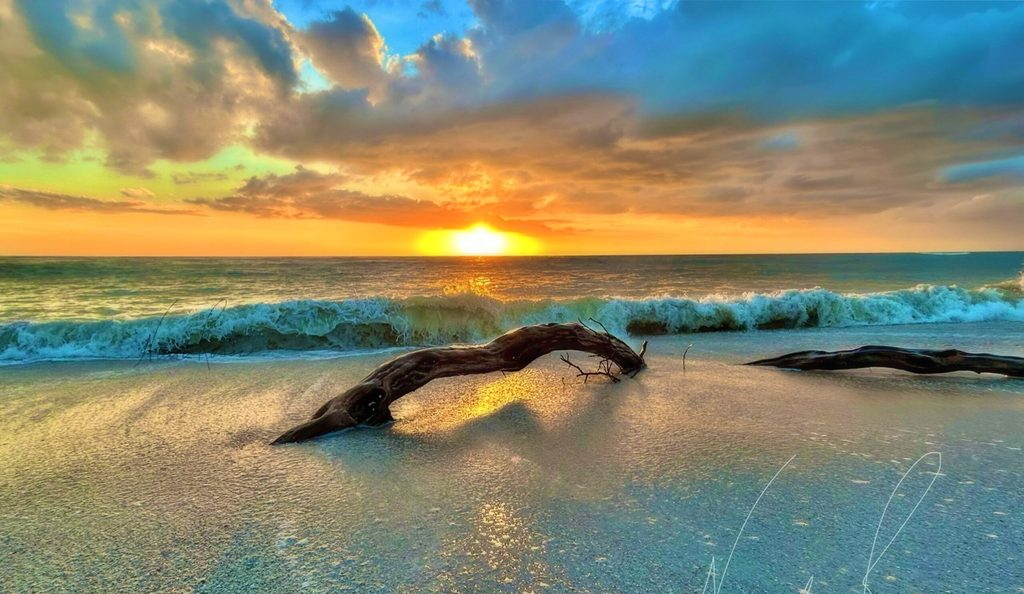
Sunset Beach is the best place to start. It sits on the Gulf of Mexico, is one of the island’s main beach areas, and is a favorite spot for watching the sun go down.
Follow the island roads toward the Sunset Beach access point and look for the marked entrance. Please use the marked path and never cross the dunes. On the sand, walk the waterline and scan the tide line for scallops, coquinas, whelk pieces, and other shells.
Tip
Come at sunrise for cool air and the best shells. Return at sunset for the colors.
2. Bartlett Beach: A Quieter Gulf-Side Access
Best for: peaceful beachcombing.
The Bartlett Beach access is at the end of Bartlett Drive. Parking and space near the entrance are limited, so arrive considerately and never block driveways or paths. From the marked entrance, follow the tide line and look for small shells tucked in the seaweed.
No single access always has the best shells. The shoreline changes with wind, tides, and storms, and the fun is seeing what the Gulf brought in today.
Tip
Try Bartlett Beach on a different morning than Sunset Beach, and compare finds with the kids or grandkids.
3. The Southern Gulf Shoreline: For Longer Walks
Best for: guests with extra time who like to explore.
The southern shoreline has a more remote feel and long stretches of natural coastline. Depending on conditions, some areas take a longer walk or a boat to reach. Ask us about the best route from your home and any current access limits. Stay on permitted paths, respect private property, and keep out of dune and conservation areas.
Tip
Bring plenty of drinking water, sun protection, and comfortable shoes, and plan to be back before the midday heat.
4. Dolphin Beach: The Pine Island Sound Side
Best for: dolphin watching and a different view of the island.
Not every beach walk has to be about shells. Dolphin Beach, near the north and south ends of Airstrip Drive on the Pine Island Sound side, is known for views across the sound and chances to see dolphins. Expect calm water and wildlife rather than the shell deposits of the open Gulf.
Important
North Captiva has an active airstrip. Never walk, sit, or stop on the runway, and follow all posted signs. Golf carts are allowed only in designated areas and are not permitted on Gulf-side beaches.
Shells You Might Find
The Gulf shoreline here gives up a good mix of shells. Common finds on Southwest Florida beaches include these.
| Shell | What to look for |
|---|---|
| Lightning whelk | A long spiral shell that opens on the left side |
| Florida fighting conch | A sturdy shell with a pointed top and a flared lip, often orange or pink inside |
| Coquina | Tiny butterfly-shaped clams in many colors, found where waves wash up |
| Scallop | Fan-shaped shells with ridges |
| Lettered olive | A smooth, glossy shell with markings like letters |
| Alphabet cone | A small cone-shaped shell with letter-like marks |
| Sand dollar | A flat, round, pale disc, but only take it if it is empty |
| Junonia | A rare, brown-spotted shell, and the one every shell hunter hopes for |
Shell lists come from the Visit Fort Myers shelling guide. Finding a junonia is rare, so treat any whole one as a good day.

Shelling Rules: What You Can and Can’t Take
The golden rule is simple: if it’s alive, leave it.
- Lee County rule. North Captiva is in Lee County. The Florida Fish and Wildlife Conservation Commission says that in Lee County shells containing live organisms may not be harvested or possessed, except oysters, hard clams, sunray venus clams, and coquinas.
- How to tell if a shell is alive. If an animal is inside, or a sand dollar is dark and covered in tiny moving spines, put it back gently where you found it. Empty shells are the ones to keep.
- Protected species. Harvesting the Bahama starfish is prohibited statewide, and so is possessing a live queen conch.
- Protect the beach. Stay out of the dunes, leave sea oats alone, fill in any holes you dig, and take your belongings home. Gulf beaches are also sea turtle nesting areas in warmer months.
Rules can change, so check the FWC shell page before your trip.
What to Pack for a Shelling Walk
North Captiva has no beach shops and no lifeguards, so bring what you need and carry it back out.
- A mesh bag, so sand falls out and shells stay in
- Water and a hat
- Reef-safe sunscreen
- Sturdy sandals or water shoes
- A tide chart or a tide app
- A small bucket for kids, and a phone for photos of your finds
If you are flying in, our travel guide explains what else to pack and how to bring groceries and supplies.
A Simple 3-Day Shelling Plan
- Day 1: Sunrise at Sunset Beach for shells, then back for sunset.
- Day 2: Bartlett Beach in the morning, then an easy afternoon at the house.
- Day 3: A longer walk on the southern shoreline in the morning, or watch for dolphins at Dolphin Beach.
Shelling FAQ
What is the best time to shell on North Captiva?
Early morning at low tide. Check the tide chart and go out at first light.
Can I take shells home from North Captiva?
You can take empty shells. In Lee County, shells with a live animal inside may not be taken, except oysters, hard clams, sunray venus clams, and coquinas.
Can I take sand dollars?
Only empty ones. A live sand dollar is dark and covered in tiny moving spines, so put it back.
Can I drive a golf cart onto the beach?
No. Golf carts are not permitted on Gulf-side beaches. Park at the access and walk.
Do I need to bring anything special?
A mesh bag, water, sun protection, and good shoes are enough.
How do I get to North Captiva?
By ferry, boat, or small plane. Our Island Info page has the details.
Make Every Beach Walk Part of the Adventure
The best shelling days leave room for slow mornings, long walks, and one more look at the tide line. Start with a quiet shell hunt, spend the afternoon relaxing at the house, and head back to the Gulf for a sunset walk.
Whether you are looking for a special shell with your kids, introducing your grandchildren to the shoreline, or just enjoying the sound of the waves, North Captiva is a place to slow down and reconnect.
Ready to plan your trip?
Stay steps from the beach at Green Tortuga or Tortuga Sunset. Both homes are pet-friendly.Book direct
Sources
shellingnorth captivanorth captiva islandisland guide
Stay in the loop
Sign up for island news and updates from Tortuga Paradise.